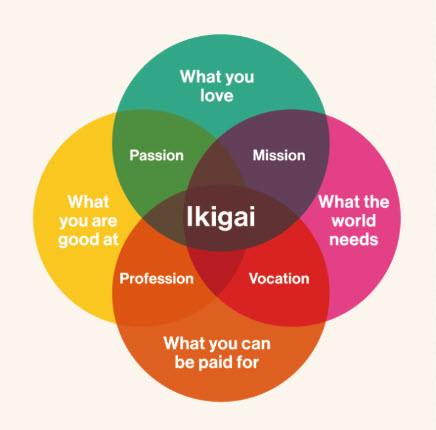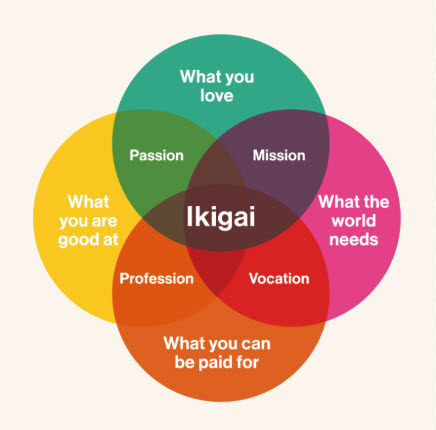
Ikigai (pronounced ee-kee-guy) is a Japanese concept that translates to “a reason for being” or “a reason to get up in the morning.” It represents the intersection of four key elements in one’s life that create a sense of purpose, fulfillment, and joy. The idea originates from Okinawa, Japan—one of the world’s “Blue Zones” known for longevity—and is often visualised as a Venn diagram with overlapping circles.
The Four Elements of Ikigai
- What you love (your passion): Activities or pursuits that bring you joy and make time fly by.
- What you are good at (your profession or skills): Your natural talents, strengths, and expertise.
- What the world needs (your mission): Contributions that address societal or environmental needs, creating value for others.
- What you can be paid for (your vocation): Practical ways to earn a living through your skills and passions.
The sweet spot where all four overlap is your ikigai: a balanced, sustainable path that aligns personal fulfillment with real-world impact and financial viability. For example, a teacher who loves educating children, excels at communication, fills a societal need for knowledge, and gets paid for it might have found their ikigai in teaching.
How to Discover Your Ikigai
While there’s no one-size-fits-all formula, common practices include:
- Self-reflection: Journaling about the four elements and identifying overlaps.
- Experimentation: Trying new activities to test what energizes you.
- Seeking feedback: Asking others what they see as your strengths.
Ikigai emphasizes small, daily joys over grand ambitions and is linked to better mental health, longevity, and resilience. It’s popularized in books like Ikigai: The Japanese Secret to a Long and Happy Life by Héctor García and Francesc Miralles, but it’s deeply rooted in Japanese philosophy rather than a rigid system.